
In a year when college athletics conversations are dominated by NIL, revenue sharing, and roster management, Coastal Carolina University reminded the industry of something essential:
Community engagement still matters and it still wins.
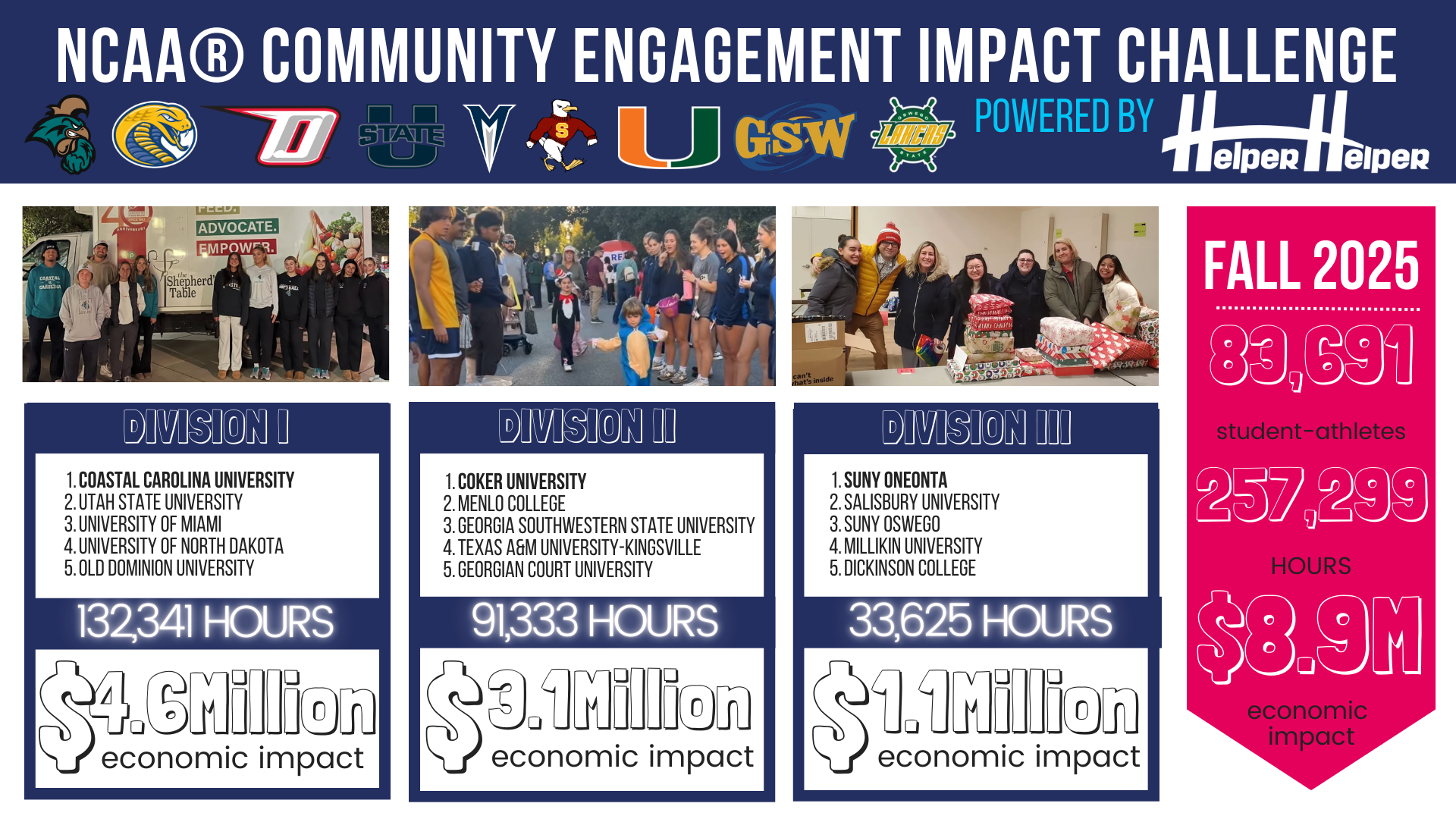
In Fall 2025, Coastal Carolina finished #1 in Division I in the NCAA Community Engagement Service Challenge, ahead of Utah State University, University of Miami, University of North Dakota, and Old Dominion University.
Their student-athletes averaged 20 hours of service each, with 100% participation, supporting programs like Miracle League, Adopt A Chant holiday giving, and outreach to local elementary and middle schools.
This wasn’t accidental. It was intentional leadership.
Community Engagement as a Competitive Advantage
Under the direction of Vice President for Intercollegiate Athletics and University Recreation Chance Miller, Coastal Carolina made student-athlete engagement a priority across the department.
Coaches aligned. Staff collaborated. Student-athletes were supported.
And the results showed up not just in service hours — but in fan engagement and community connection.

By placing a stronger emphasis on community service, coaches and staff worked collaboratively to enhance both the quality and overall impact of our outreach efforts, with a clear return on investment reflected in the increased fan support we see during competition.
In an era where departments are fighting for relevance and connection, community engagement builds something NIL money can’t buy:
Trust. Loyalty. Identity.
From Outside the Top Five to #1
Just one year earlier, Coastal Carolina wasn’t even in the top five.
So what changed?
Alignment.
“We approached community engagement with a more intentional and unified mindset across the department. With continued leadership support and greater alignment among coaches and staff, our student-athletes were encouraged and supported in their service efforts.”
— Cari Rosiek
When engagement becomes a department-wide priority — not just a SAAC initiative — participation becomes culture.
How Infrastructure Makes It Possible
Tracking and organizing engagement across dozens of teams isn’t simple.
That’s where systems matter.
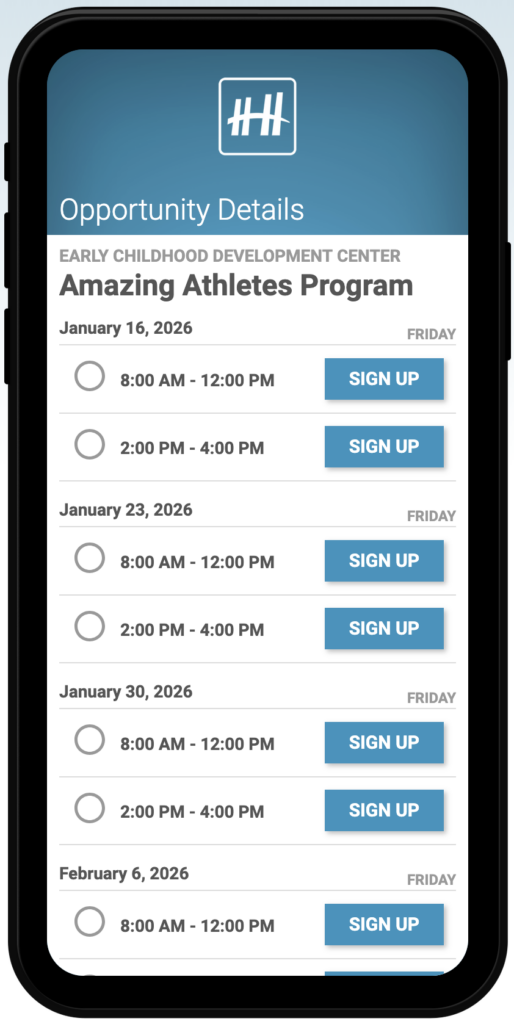
“Working with Helper Helper has been an incredibly valuable experience. Their staff is highly responsive, and the platform allows us to track community engagement seamlessly while strengthening how our student-athletes connect with the community.”
— Cari Rosiek
Using Helper Helper, Coastal Carolina was able to:
-
Track service hours across every team
-
Coordinate events efficiently
-
Highlight impact to leadership and stakeholders
-
Create visibility and accountability
This infrastructure helped turn intention into measurable results.
What This Means for Athletic Directors
In today’s landscape, ADs are balancing:
-
NIL collectives
-
Revenue sharing
-
Transfer portal challenges
-
Facility investments
But community engagement is not a “nice-to-have.”
It drives:
✔ Fan support
✔ Donor storytelling
✔ Recruiting differentiation
✔ Campus relationships
✔ Student-athlete development
Coastal Carolina’s experience shows that when engagement is prioritized, the return is real.
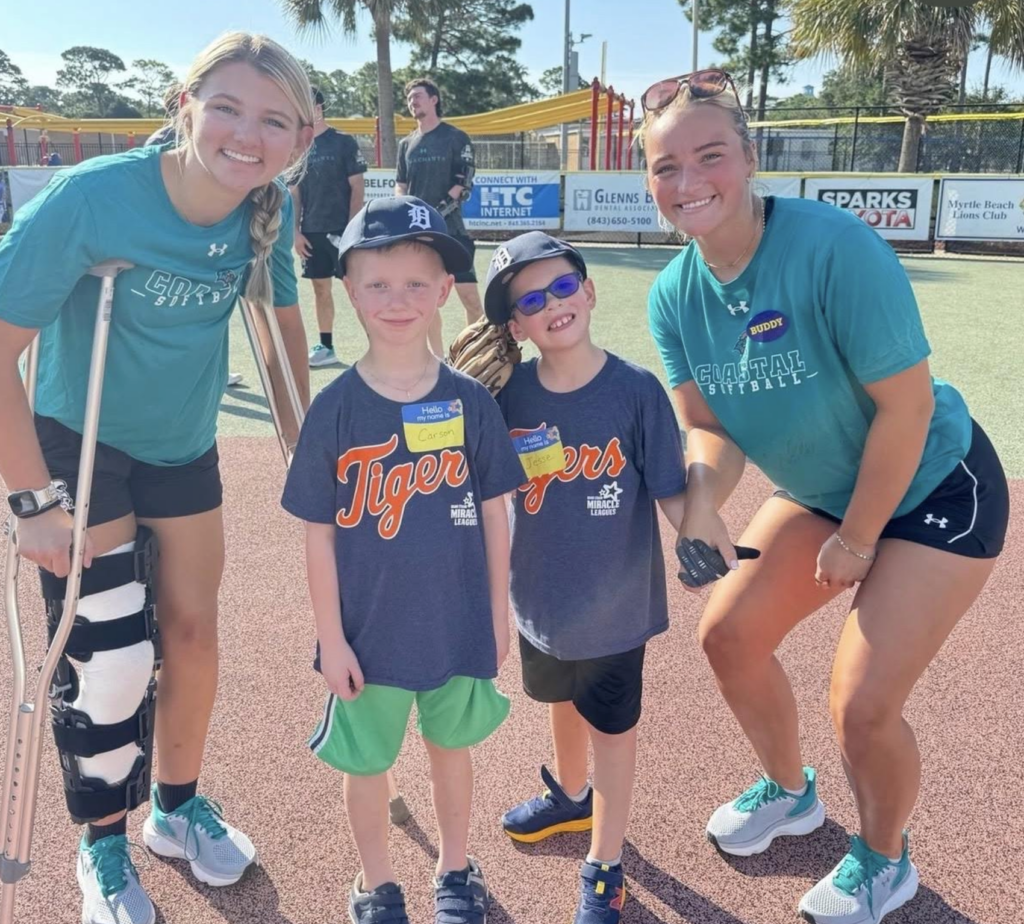
Softball GSML – Bailey Huff (L) Reagan Troy(R) Softball Student-Athletes assisting with Grand Strand Miracle League
Student-Athletes Lead the Way
“This award reflects the hard work and dedication of our student-athletes… and the meaningful opportunities created for them to make a positive impact.”
— Charlotte Sadler, SAAC President, Coastal Carolina
“Our dedication to community service represents a culture of leadership and responsibility, where giving back is valued as highly as competitive success.”
— Cari Rosiek, Associate AD
“They are not only elite competitors, but elite leaders. This recognition validates the model we are building.”
— Chance Miller, Athletic Director
Community engagement isn’t about checking a compliance box.
It’s about building leaders.
The Bigger Picture
As college athletics evolves, the departments that thrive will be those that stay connected to their communities.
Because while NIL deals come and go, relationships last.
Coastal Carolina’s championship in community engagement is a reminder that student-athletes are still one of the most powerful forces for good on campus — and with the right leadership and tools, that impact can scale.